
Is Exhibit Photography a Marketing Asset or a Sales Tool?
Exhibit photography is commonly viewed as a marketing deliverable. A library of high-quality booth photos captured across multiple trade shows, over months or years, becomes a long-term asset that supports brand awareness, social media, websites, and post-show promotion.
What’s often overlooked is the role exhibit and trade show photography plays in supporting sales and business development. Having current, professional booth photos readily available immediately after an event helps shorten the sales cycle, attract new clients, and provide clear proof of execution and quality.
When planned intentionally, exhibit photography becomes a shared asset serving both marketing and sales teams with content that delivers immediate impact in the sales cycle while continuing to work as a marketing tool long after the event ends.
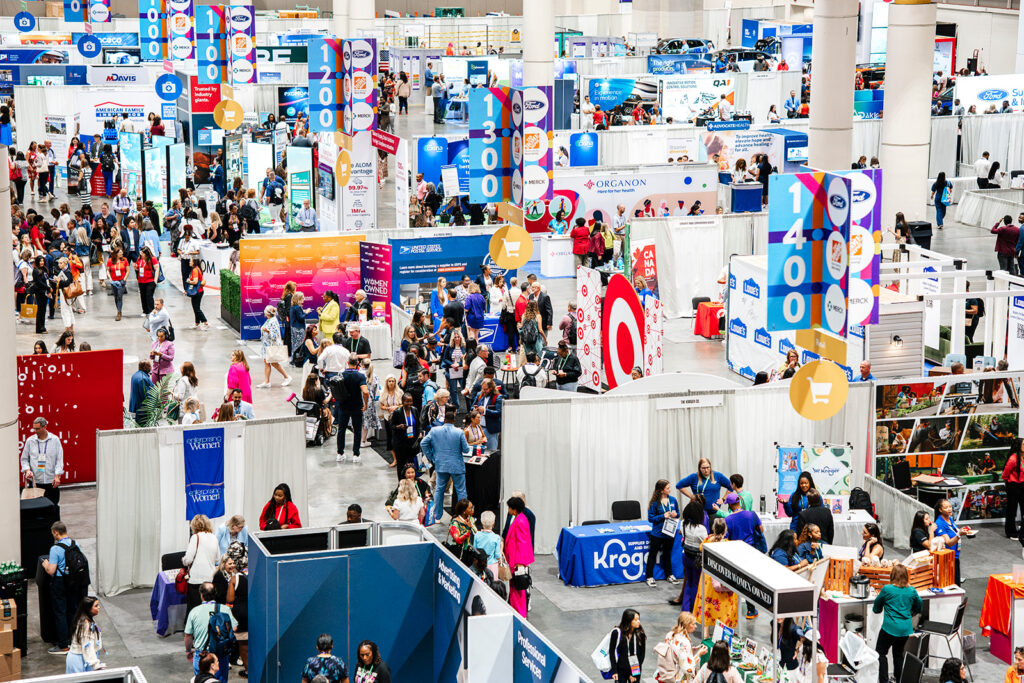
Why Does Exhibit Photography Often Start With Marketing?
In many organizations, exhibit photography is budgeted and managed by marketing teams because:
- An organization’s presence at a trade show is part of a larger marketing strategy
- Visual content naturally aligns with branding and promotion
- Photos are expected to support recap posts and social content
Marketing absolutely benefits from exhibit photography and in many cases, they are the primary stewards of the content.
However, focusing only on promotional use can unintentionally limit how the photography is planned, captured, and leveraged afterward.
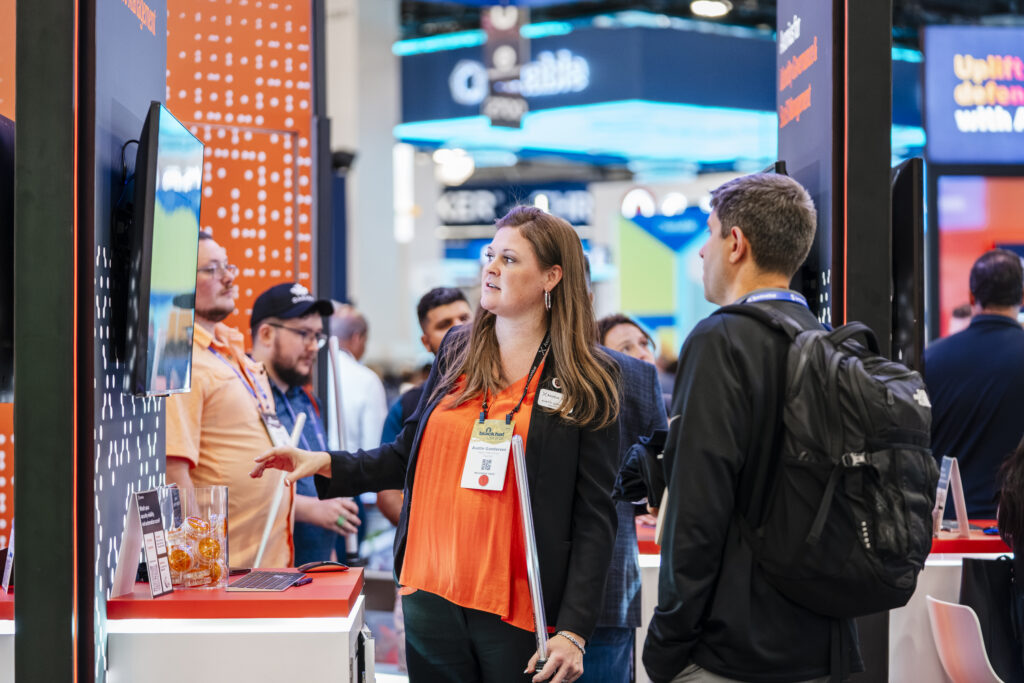
How Does Exhibit Photography Supports Sales and Business Development?
Beyond marketing, exhibit photography plays a critical role in revenue-generating conversations.
Sales and business development teams routinely use booth photography in:
- Sales decks and capability presentations
- RFP and proposal submissions
- Sponsorship and partnership pitches
- Follow-up conversations with prospective clients
- Internal alignment across regional or national teams
In these moments, exhibit photography is more about proof than promotion.
Clear, accurate visuals help client prospects quickly understand scale, execution, and professionalism. They reinforce confidence before a conversation ever begins, shortening the sales cycle from the outset.
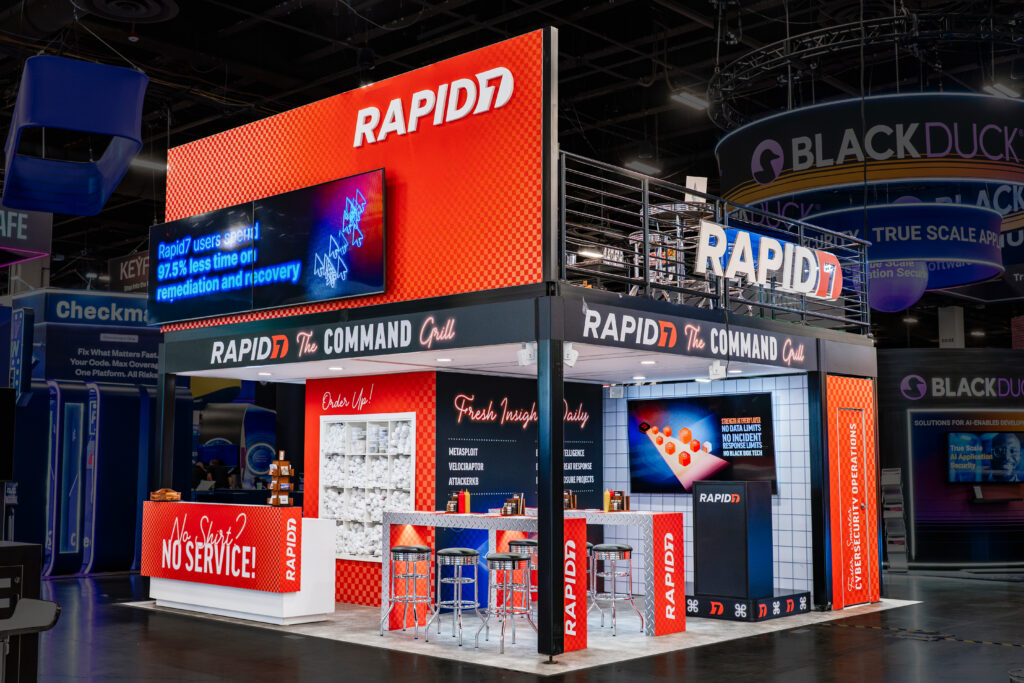
Exhibit Photography as Proof Builds Trust and Credibility
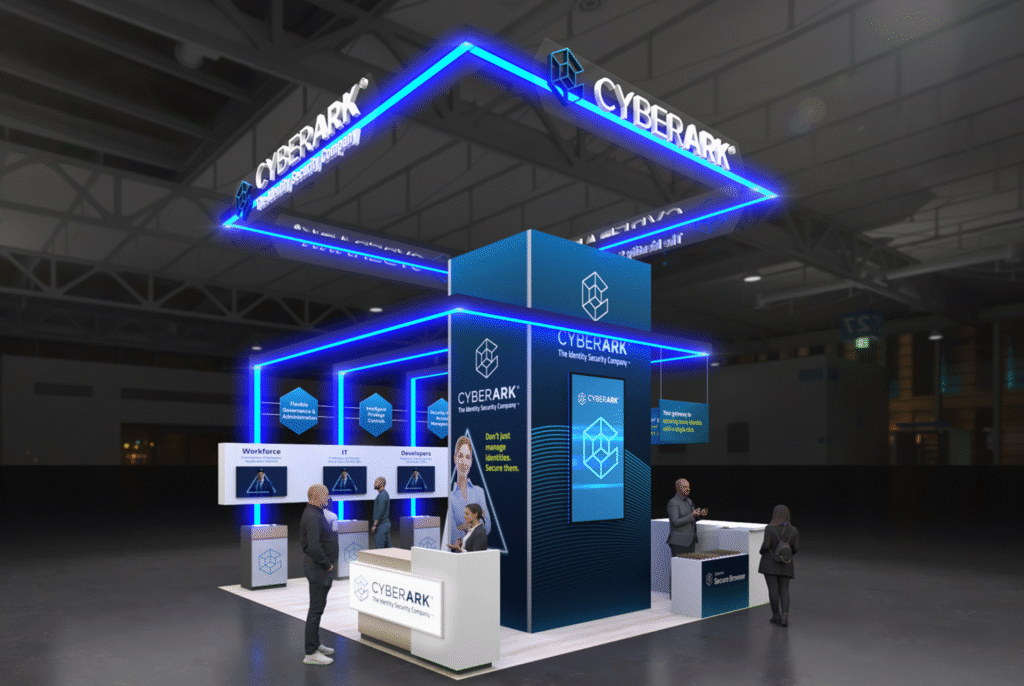
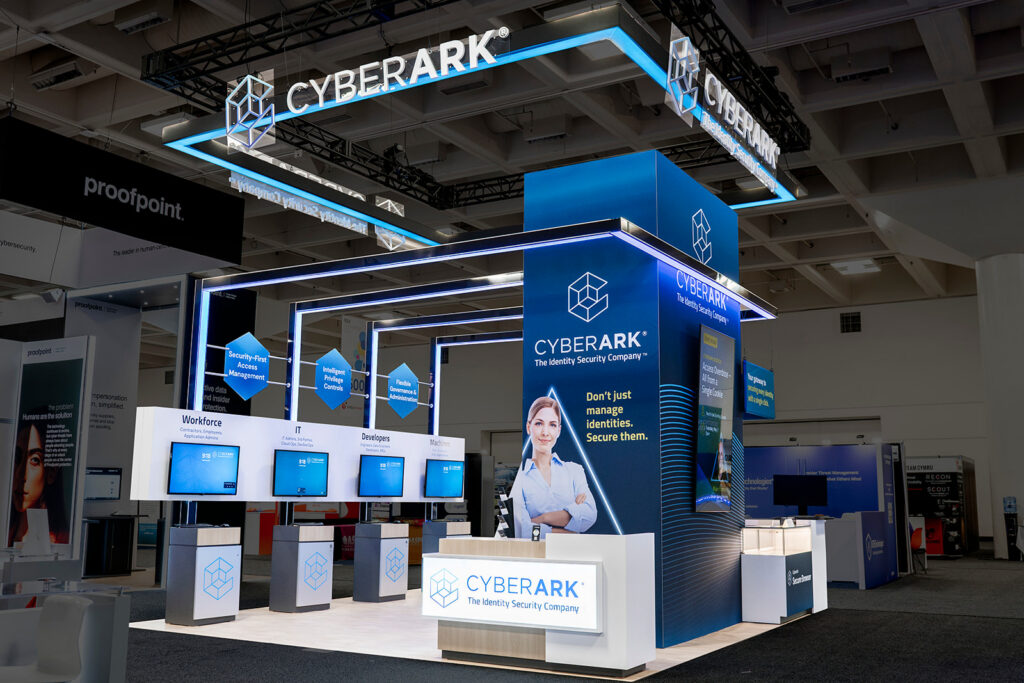
One of the most beneficial uses of exhibit photography, especially for exhibit houses and booth builders, is side-by-side comparison with design renderings. (We like to call this “Rendering-to-Reality”)
An expert-level exhibit photographer intentionally captures their images of a booth on a trade show floor to closely match the original design rendering by:
- Matching camera angles
- Preserving sightlines and proportions
- Emphasizing finishes, materials, and lighting
- Showing the booth as it was designed to be experienced
This allows sales teams from exhibit houses and builders to confidently prove to current clients “What you bought is exactly what you got!”. The images become a physical representation of your success and their success.
Likewise for new client prospects, by using side-by-side photos from a combination of past and current projects a salesperson can build trust and credibility. “From our portfolio, you can see that we’ve consistently delivered on our promises time and time again.”
How Does Exhibit Photography Support Exhibitors?
For exhibitors, exhibit photography serves as more than a visual recap, it too becomes documented proof of execution, investment, and performance.
Professional booth photography provides clear documentation that the design an exhibitor approved is the design that was delivered onsite. Side-by-side comparisons between renderings and final photography help confirm that what was designed is what was built, reinforcing confidence in both internal decisions and external partners.
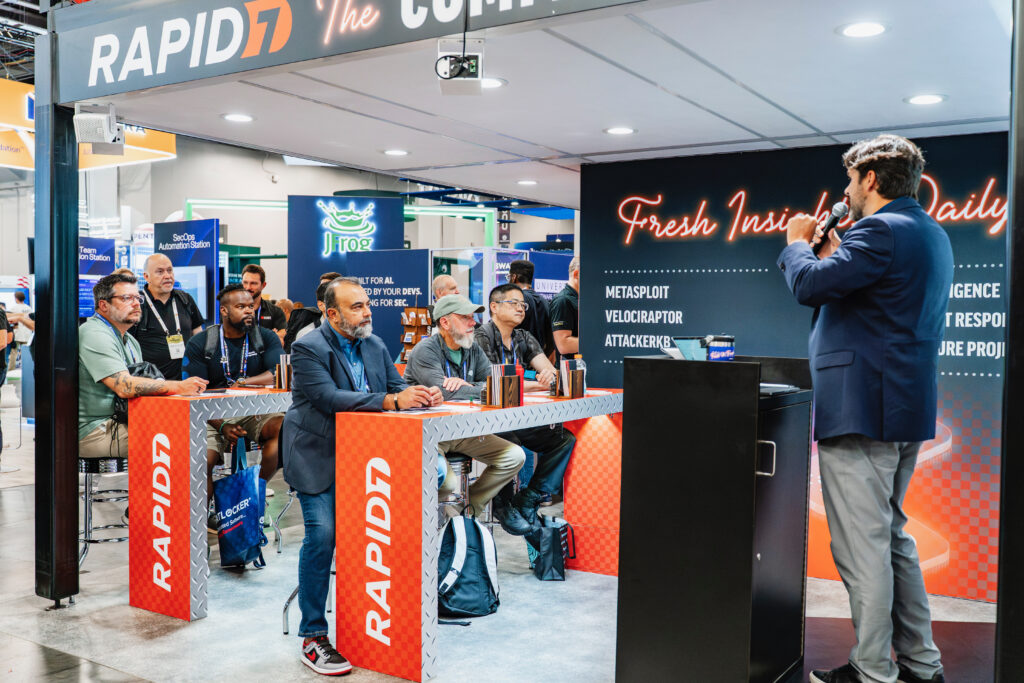
Exhibit photography also plays an important role in defending ROI to leadership and internal stakeholders. Visual documentation of booth presence, attendee engagement, product demonstrations, and traffic flow helps teams clearly communicate how the investment performed, especially when budget decisions are reviewed after the event.
Beyond documentation, these images become valuable marketing assets. Photos capturing real attendee interactions, live demos, and in-booth conversations provide authentic content that reflects how the exhibit functioned in practice.
Over time, a library of exhibit photography also helps exhibitors evaluate and refine future booth designs. Reviewing past photos can reveal branding opportunities, layout improvements, and engagement patterns that aren’t always obvious during a busy show.
Finally, exhibit photography creates a visual record that helps exhibitors assess value across markets and events. Being able to reference what was delivered at different trade shows, alongside what was spent, supports more informed budgeting, planning, and decision-making for future exhibits.
Do I need exhibit photos for every booth?
Many exhibitors and builders photograph a booth once and reuse the images indefinitely. While this can work short term, it often leads to challenges over time:
- Outdated branding after refreshes or redesigns
- Missed opportunities to show evolution or growth
- Inconsistent visuals across multiple shows
- Limited flexibility for sales and marketing teams
A more strategic approach is to treat exhibit photography as an ongoing visual record, updated as designs, branding, and objectives evolve.
“But, I have the same booth design at every trade show, why would I need to photograph each one?“
Even when the booth design remains the same, each trade show creates a different context. Audience makeup, show size, floor placement, lighting, surrounding exhibits, and attendee engagement all change from event to event. Photographing the booth at multiple shows captures how it performs across different markets and environments, providing a more accurate, well-rounded representation of the exhibit in real-world use.
Over time, this expanded library gives exhibitors (and builders) stronger proof of consistency, better material for sales and marketing teams, and clearer insight into how the booth functions across varying conditions. That kind of value can’t be won from single set of images.
What Should I Look for in a Good Exhibit Photographer?
Exhibits and trade shows are a highly specialized discipline in photography. Capturing a booth accurately and effectively requires technical expertise and situational awareness that goes well beyond general event photography.
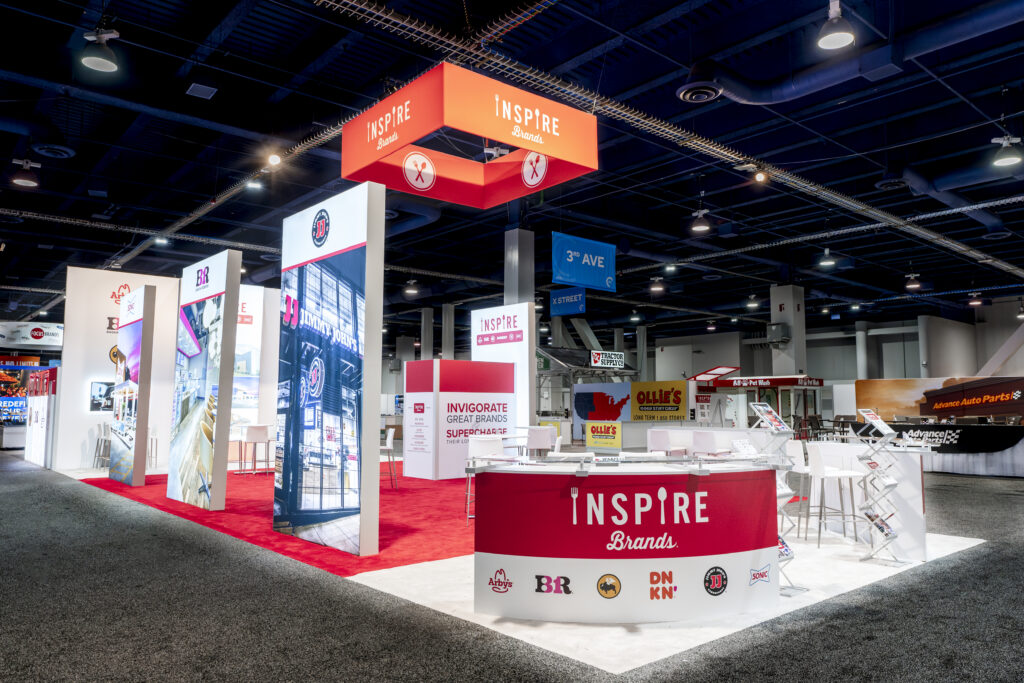
A qualified exhibit photographer should understand how to represent a booth at scale while still isolating important details and interactions. This often requires specialized lenses: wide-angle lenses to accurately convey size and layout, and longer focal lengths to capture attendee engagement and product demos from across the aisle without disrupting activity inside the booth.
Post-production is equally important. On a crowded trade show floor, the surrounding booths’ signage, branding, and visual distractions are unavoidable. A skilled trade show photographer knows how to minimize or remove these elements through thoughtful composition and detailed editing, ensuring the final images reflect your brand, not the noise around it.
Just as critical is how the photographer operates onsite. An exhibit photographer must be comfortable working within an active booth environment without interrupting conversations between staff and attendees. They need to understand booth flow, recognize when sales conversations take priority, and still be able to give clear, efficient direction when brief opportunities arise. Striking this balance is essential and it’s not something every photographer can do well.
Because of these factors, exhibit photography shouldn’t be judged solely on price. The cheapest option can lead to compromised results, including poor angles, missed interactions, distracting backgrounds, or imagery that doesn’t accurately represent the booth or brand.
That being said, exhibit and trade show photography is more affordable than you might think.

What’s the Cost of Exhibit Photography?
Exhibit photography is often more cost-effective than many exhibitors expect (and it should be!). Unlike conferences that require all-day coverage of general sessions, breakouts, keynotes, and receptions, exhibit photography is typically focused, efficient, and time-bound.
An experienced exhibit photographer who works quickly and efficiently onsite can offer competitive pricing through clear hourly rates or well-defined packages. The scope is intentional, the coverage is targeted, and the cost reflects that efficiency.
It’s also worth considering where the budget comes from. While exhibits are often assigned to marketing budgets, the resulting assets are frequently used by sales and business development teams. In many organizations, pulling partial or full funding from sales or business development budgets better aligns the cost with how the content is actually used.
This approach can also make ongoing exhibit photography more sustainable. Rather than treating exhibit photography as a one-time marketing expense, shared ownership across marketing and sales budgets reflects its role as a cross-functional asset.
True Colors Creative: Exhibit Photography & Videography
At True Colors Creative, we understand every exhibit booth has its own unique needs and a “one-size-fits-all” approach to pricing is counterproductive. Instead, we prioritize flexibility. Choose from hourly rates, packages, add-ons, or customized services. Discounts are available for clients with multiple booths at a single event, or coverage of a single booth across multiple events. We can also lock in multi-year rates if your booth returns to an event year after year.
Exhibit Booth Photography Hourly Rates:
$450 1st hour
$250 each additional hour (up to 5hrs total)
*Includes a minimum of (30) edited images per hour
Exhibit Booth Videography Hourly Rates:
$450 1st hour
$250 each additional hour (up to 5hrs total)
*Includes Raw video files; does not include video editing (see Add-On options)
Packages:
$1,260 – 2hrs of photography & videography coverage
*Includes a minimum of (30) edited images per hour; unedited raw video files
$2,160 – 4hrs of photography & videography coverage
*Includes a minimum of (30) edited images per hour; unedited raw video files
$3,060 – 6hrs of photography & videography coverage
*Includes a minimum of (30) edited images per hour; unedited raw video files
Add-Ons:
Video Editing
Booth Build Time Lapse Video
Interviews & Testimonials Video
Headshots & Group Photos
Expedited Delivery of Content
& Much More!
Contact us to discuss your exhibit booth photography for a free quote!
Julian & Jazzmin
702.279.5058
Info@truecolorscreative.com






JOIN THE PARTY!
Subscribe to the True Colors Creative newsletter to learn more about exclusives, updates and more!

Subscribe